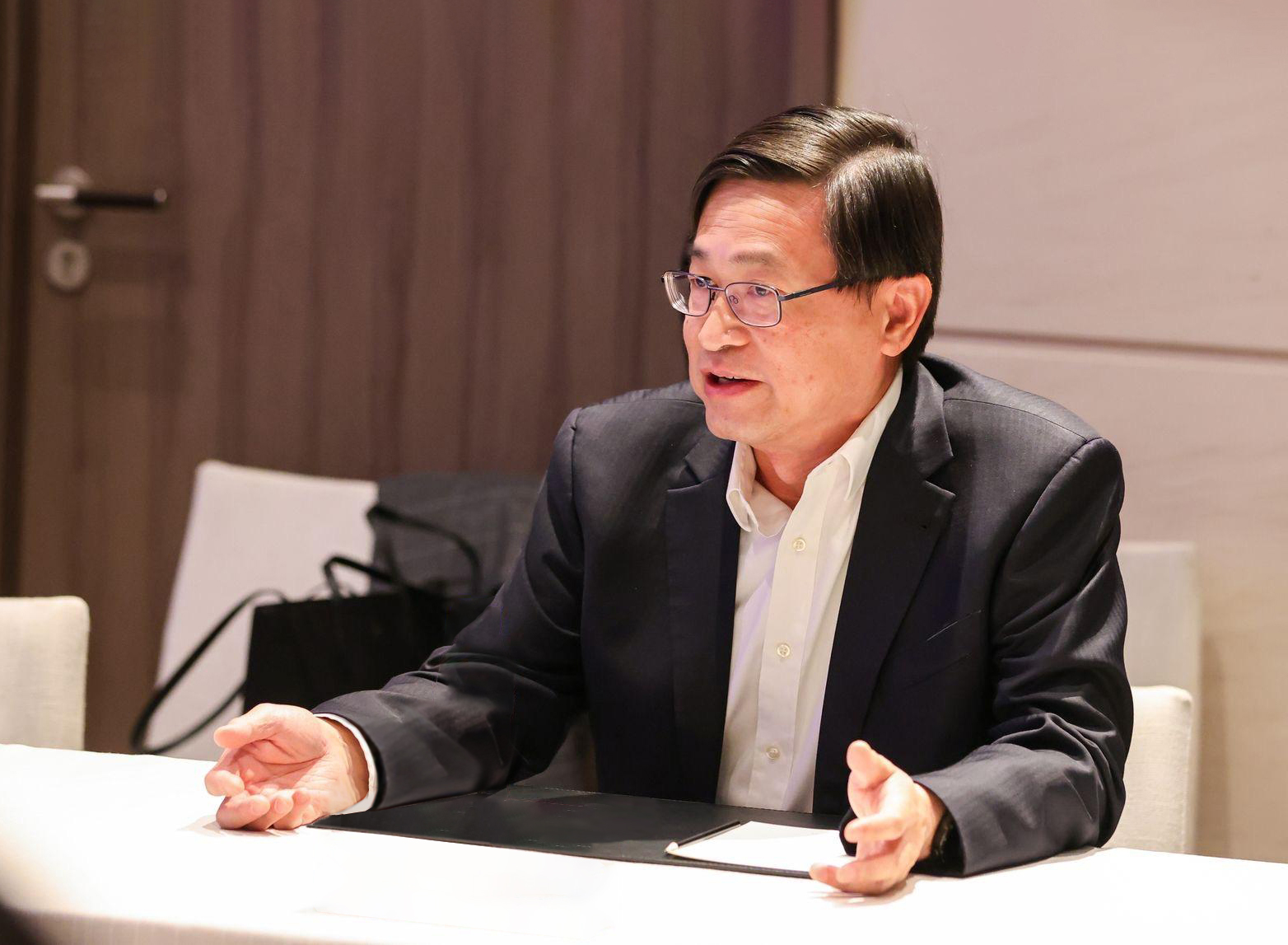
Kee Ong and His Journey Through the Transformation of the Digital World
- Published on
- Author
- 張怡婷
Kee Ong and His Journey Through the Transformation of the Digital World
The story of Kee Ong is a chronicle of ambition, resilience, and vision—a journey that began in Taiwan and expanded to the global technology stage. Growing up overseas, Ong developed a keen interest in the emerging field of computer programming during his college years. Acting on his high school teacher's advice, he enrolled in the Computer Engineering program at National Chiao Tung University, even though he barely knew what the discipline entailed. Little did anyone expect that this decision would mark the beginning of his lifelong journey in the world of information technology.
From Junior R&D to Australia's ICT Distribution Powerhouse
After graduation, Ong joined MiTAC, a subsidiary of the MiTAC-Synnex Group, diving headfirst into the world of IT research and development. His early work involved programming microprocessor chips inside PC keyboards—on devices with a mere 256K of memory. To meet tight deadlines for tech expos, he often worked around the clock, going without sleep for days. These grueling experiences honed his technical expertise but also sparked a desire to broaden his horizons.
Opportunity knocked when MiTAC planned to set up a factory in the UK. Ong volunteered for the overseas assignment, which not only changed his location but also transformed his career trajectory—from R&D to product sales and marketing.
In 1998, a twist of fate led him to Synnex Technology International, the MiTAC Group's distribution arm, where he took on the formidable challenge of establishing a foothold in the Australian ICT market. That decision tied his life to the "Lucky Country" for the next 26 years.
Starting as a product manager, Ong steadily climbed the ranks. Under his leadership, Synnex Australia grew from a modest AU$100 million operation to a staggering AU$3.1 billion enterprise by 2024, becoming the nation’s largest ICT distributor and ranking among Australia’s top 120 companies. His responsibilities extended far beyond sales—he spearheaded the development of highly automated logistics centers in Sydney and Melbourne, navigated complex negotiations with government agencies and labor unions, and mastered the art of building cohesive teams in a multicultural environment.
Distribution: The Bridge and Reservoir of the Digital World
As an IT distribution pioneer, Ong defines distributors as the "Synergy Nexus"—the indispensable bridge in the intricate ICT supply chain.
Manufacturers typically operate within large, complex organizations. If they were to manage countless small resellers and end-users directly, they would face two major hurdles: delivering adequate service and absorbing the unsustainable costs of account management, logistics, and financial transactions. This is where distributors play a critical role.
Distributors act as specialized platforms, simplifying complexity and connecting markets. Upstream, they maintain focused relationships with a select group of manufacturers; downstream, they deliver integrated, end-to-end solutions to thousands of customers. In essence, they transform complexity into efficiency.
Ong likens distributors to "reservoirs." Before major shopping events like Singles' Day or Black Friday, factories must produce goods months in advance. These products cannot pile up in factories—they need distributors to store, schedule, plan, and allocate inventory so that demand surges can be met efficiently. This complex inventory management system is now a prime application for AI-driven analytics.
Drawing on decades of experience, Ong notes that the traditional distribution model has been radically reshaped by the acceleration of information flow. Manufacturers wield increasing influence; technologies like mobile activation tracking allow them to monitor every product's destination with precision—something unimaginable in the past. Consequently, distribution strategies must evolve dynamically with technological innovation.
AI: The Fog and the Chill — Transformation Is Non-Negotiable
In the latter part of his talk, Ong shifts focus to the AI revolution, painting a vivid picture:
"The skies are buzzing with aircraft, but the ground tells a different story."
He recalls introducing cloud solutions in Australia eight years ago—a time when few understood what "cloud" meant. Today, AI faces a similar paradox: at the top, capital investments are surging, driven by initiatives like NVIDIA's AI factories and national competitiveness strategies. Yet at the operational level, adoption remains tepid. The excitement in the stratosphere contrasts sharply with the chill on the ground.
Ong underscores a critical truth: digital transformation is the prerequisite for AI. Implementing AI without first digitizing and cleansing data is like firing blanks. Many small and medium-sized enterprises lack clean, structured datasets; feeding raw, unrefined data into AI systems inevitably leads to flawed or misleading judgment.
But technology is only part of the equation—the real challenge is people. Employees often fear job loss when AI enters the workplace. To succeed, companies must redefine roles, empowering staff to harness AI rather than perform repetitive tasks. This shift transforms AI from a perceived threat into a collaborative tool.
Finally, Ong concludes with a powerful reminder: the journey to AI adoption is not instantaneous—it's a long road that requires commitment and vision. Successful implementation hinges on more than technology; it involves reshaping mindsets, redefining business models, strengthening cybersecurity, and adapting to evolving regulations and ethical standards. AI is not a magic solution—it is a strategic tool designed to empower decision-making. And while AI can provide insights, the ultimate judgment must always rest with people. Embrace this transformation as an opportunity to lead, innovate, and create value for the future.
A Vision for the Next Generation
After more than a quarter-century in the ICT distribution arena, Ong paints a vivid and authentic picture of the industry—from chip-level programming to global-scale logistics, from evolving distribution models to the myths and realities of AI. His advice to students:
"Engage, exchange, and broaden your perspective. In tomorrow's globalized world, these qualities will be your greatest advantage. "