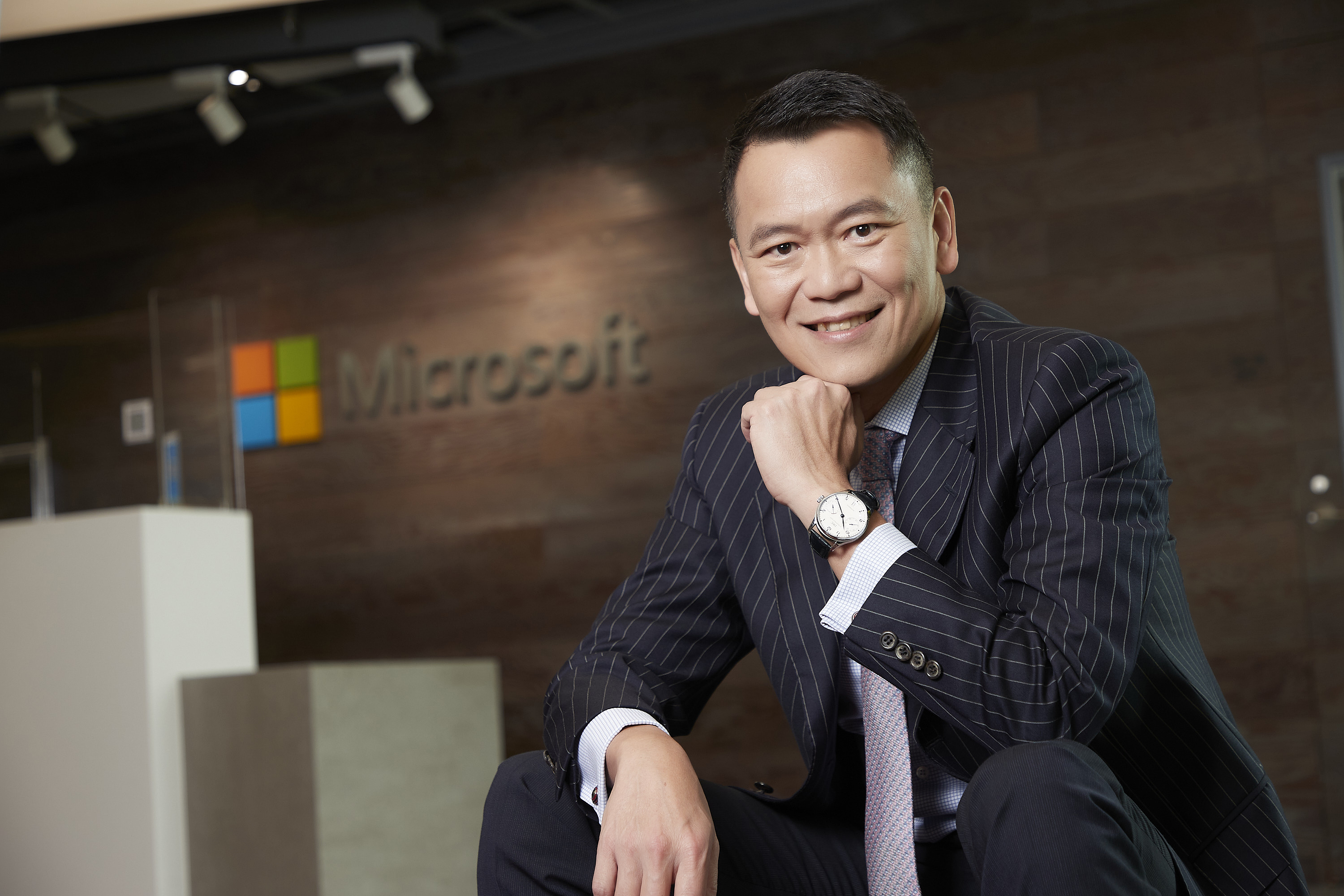
Where Technology Meets Life: The Decisions and Beliefs Guiding Alumnus Sean Pien
- Published on
- Author
- 張怡婷
Where Technology Meets Life: The Decisions and Beliefs Guiding Alumnus Sean Pien
"I noticed that when I spoke, people paid attention, while others were often overlooked." It was a small but telling insight that sparked Sean Pien's interest in getting along with other people. This guided him toward management and business.
Pien's academic journey captures that blend perfectly: mastering technical expertise while learning how to interact effectively with people. Pien earned a bachelor's degree in Computer Science and later a master's in Information Management from National Chiao Tung University. His passion for programming began in high school, and NCTU gave him the space to really sharpen his coding and problem-solving skills.
But in his junior year, something shifted. Business, people, and decision-making strongly attracted him. That moment was a real turning point. He began to see ways his IT background could connect with finance, which pushed him to pursue a master's in Information Management. There, he dug into financial engineering, algorithmic trading, and AI. This opened the door to his cross-disciplinary career.
University wasn't just about studying for him. Back in university, he threw himself into campus life like joining the music club, exploring creative writing, and even taking on a role as a counselor at off-campus camps. At the same time, he kept busy with all kinds of part-time work, from helping out at the Computer Science department's computer center to driving the school shuttle and teaching at a cram school. Behind all of this was a simple principle: getting the highest return for the smallest investment of time. Along the way, he not only expanded his network but also saw how his leadership and empathy could become real strengths — ones that continue to shape his career.
Early in his career, Pien worked as an engineer, building program trading systems and applying what he had learned in graduate school across financial markets in Taiwan, Singapore, and Hong Kong. But Pien didn't just stick to engineering. He moved into business and marketing, working in areas like venture capital, telecommunications, and consulting, all while steadily growing his cross-disciplinary skills and management perspective.
"Every job teaches you something," Pien likes to say. When it comes to management, he's convinced that the best leaders are people who once knew how to follow. Seeing how different managers lead and experiencing it yourself help you figure out your own approach to leadership. He often points to Microsoft's "Three Leadership Principles"—Create Clarity, Generate Energy, Deliver Results—as the blueprint for his thinking.
Leadership goes beyond slogans. He insists, "It's not just about answering to your boss. You need to carry the responsibility for your team members and earn their trust." When challenges hit, he leads by example, pulling the team back together instead of blaming anyone. For him, true leadership means identifying problems, coordinating resources, and delivering meaningful solutions.
Whenever he faces a career decision, he asks himself three questions: What excites me? What am I actually good at? And what's in demand out there? The point where all three meet usually guides his next move. He also stresses that leaving a job shouldn't mean burning bridges. Keeping strong ties with past employers and avoiding head-to-head competition isn't just professional courtesy; it's a smart, long-term strategy that keeps the door open for future collaboration and unexpected opportunities.
When evaluating a job, he looks at four key factors:
1.Is this job forward-looking?
2.Does it match my skills and passions?
3.Will it let me grow and contribute meaningfully?
4.And does it fit with the company culture and my manager's style?
When all four line up, that's when he feels fulfilled and confident he's building a career that can last.
Pien sees failure and difficult choices differently. He says, "Cutting your losses doesn't mean giving up. It means getting ready to start again." For him, the important part isn't falling—it's taking a step back, learning from it, and returning stronger.
With AI advancing so rapidly, he says the real danger isn't the technology itself—it's that we may lose the ability to think critically about the problems we're trying to solve. He says, "AI can handle about 80% of the problems we already know. The tricky part is still on us. We need to ask the right questions, make sense of the responses, and figure out how to use them effectively." Pien encourages students to keep an open mind and think across disciplines, while also making lifelong learning a habit. When it comes to Computer Science majors, he says it's not just about coding—you also need to be the kind of person who can connect technology with business and people.
Before the interview ends, Pien takes a moment to reflect, then says, "Stay curious and stay human—that's the only way technology can truly work for people."
Those words really sum up his outlook: it's about navigating the space between humanity and technology, and using it to create a positive, lasting impact.